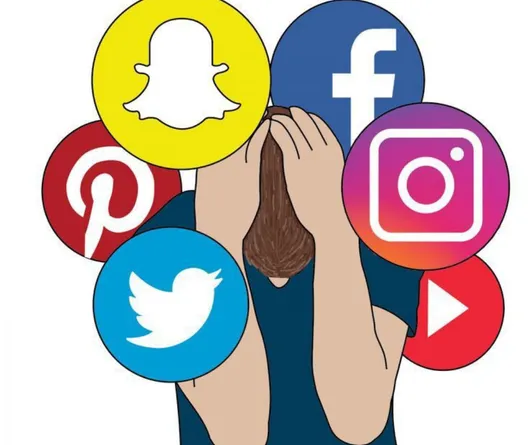
After spending some time scrolling through social media, it is easy to notice something: the same fonts, similar color palettes, familiar video styles, identical transitions, the same sounds and almost the same phrases used to communicate different ideas…
And it is not limited to social media. From websites and advertising films to presentations and app interfaces, many parts of the digital world are beginning to share a similar aesthetic.
So, is everyone really doing the same thing online, or are we simply moving toward the same things because we see that they work?
When Something Works, Everyone Uses It
In the digital world, a successful format rarely stays unique for long. When a certain video style gets attention, similar versions quickly appear. When a visual language becomes popular, it spreads across different industries. When a particular way of communicating stands out, countless variations soon follow.
There is an understandable reason for this.
No one wants to take a completely unknown approach. Especially in content creation, a format that has already proven successful can feel like a safe starting point for a new idea.
But as repetition increases, differentiation decreases.
At some point, what we see is no longer a trend, but copies of a trend that all start to look alike.
Algorithms Have an Aesthetic Side, Too
Algorithms do more than determine what we see. Over time, they also influence what gets produced more frequently.
Because what gets visibility gets repeated.
Fast-paced videos are produced more often. Certain visual styles become more common. Content structures that audiences are already familiar with turn into safer choices.
And this creates an interesting cycle in the digital world:
What gets seen multiplies, what multiplies becomes familiar, and what becomes familiar gets reproduced again.
As a result, content created by completely different people can begin to speak the same digital language.
Looking “Good” Is Not Always Enough
Another reason digital aesthetics have become increasingly standardized is that visually “correct” styles are adopted very quickly.
Minimal layouts, simple typography, certain color combinations, polished product photography or cinematic visuals are not problems in themselves. In fact, many of them can be highly effective.
The problem begins when every idea starts being communicated through the same visual formula.
Looking good and having a distinct character are not the same thing.
A well-designed piece of content can still disappear within seconds if we have already seen it a hundred times before. Meanwhile, a much simpler idea can stay in our minds longer if it has a perspective of its own.
This brings up another question:
How do we get rid of the feeling that “someone else could have made this, too”?
Originality Does Not Always Mean Looking Different
Being original does not necessarily mean finding a font no one has ever used or creating a video format that has never existed before.
Sometimes, it is enough to use the same tools with a different idea.
The same camera, platform, trending sound or design tools can produce completely different results. Because the real distinction often comes not from the tools themselves, but from the thinking behind them.
This is where a brand, content creator or creative team’s own perspective becomes important.
In a digital environment where everything seems to look alike, creating something distinctive does not mean reinventing everything. Sometimes, it simply means looking at something everyone is already using from a different angle.
Trying to Be Different Can Create a New Similarity
The search for originality can also become its own trend.
While trying to “stand out,” certain design styles, unusual camera angles, unconventional storytelling techniques or deliberately unpolished content can quickly start looking alike as well.
So the challenge is not simply avoiding trends.
The real question is why you are making that particular choice.
A design can be minimal not because minimalism is popular, but because simplicity communicates the idea better. A video can be fast not because fast editing is trending, but because the idea itself requires that rhythm.
In other words, originality is less about looking different and more about making choices that have a reason of their own.
Frequently Asked Questions
Why does digital content look so similar?
The rapid reproduction of popular formats, algorithms favoring certain types of content and the repeated use of methods that have already proven successful all contribute to the growing similarity in digital content.
Does using trends make content less original?
Not necessarily. Using a trend does not automatically make content ordinary. What matters is how the trend is interpreted and whether the content carries an idea of its own.
How can you create original digital content?
Originality does not come simply from using a different visual. It is more about having a distinctive idea, perspective and way of communicating it. Even the same tools can produce completely different results.
Finding Your Way Through the Similarity
In a digital world where everyone has access to the same tools, trends and formats, standing out is no longer about finding an effect that nobody else has used. The real difference comes from knowing why you are making something and being able to communicate it through a perspective of your own.
As a new-generation creative and digital advertising agency, Babel, we focus not only on what is popular, but also on how an idea can reveal its own character throughout the creative process. Because standing out in the digital world does not always mean looking different; sometimes, it simply means looking at the same world from another perspective.